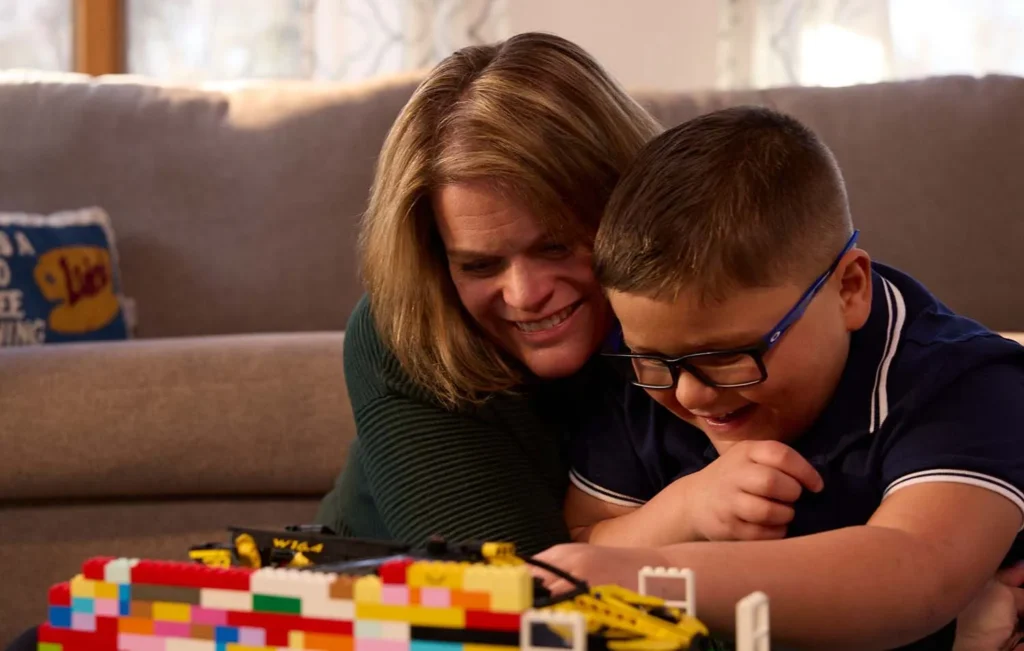
Ben’s story begins with a mystery that quickly becomes a crisis.
From infancy, Ben was always hungry — not in the way most toddlers are, but in a way that consumed his entire day. By the time he was just two years old, he weighed 65 pounds and struggled to crawl. His parents wondered if he would ever walk.
Karen and Jonathan stepped into action early. They carefully managed Ben’s portions, hid snacks, avoided social situations centered around food, and sought answers from specialist after specialist. Despite these efforts, Ben continued gaining weight at an alarming pace. By age three, he weighed close to 100 pounds, gaining nearly a pound a week despite strict dietary controls. No matter how much he ate, his body never registered fullness.
The breakthrough finally came through genetic testing, which revealed that Ben had a rare disease caused by impairment of the MC4R pathway in the brain. The resulting disorder, known as leptin receptor (LEPR) deficiency, disrupts the body’s ability to process signals of fullness, leaving the brain convinced it is constantly starving.
“With someone like Ben, there is a twist of genetic fate,” explains Dr. Al Garfield, Chief Scientific Officer at Rhythm Pharmaceuticals. “[Ben] has inherited a mutation in one gene, which is vitally important for his body to be able to communicate to his brain that he has consumed enough food, and as a result, he can stop eating. Losing the function of that particular gene breaks the connection.”
For Karen and Jonathan, the diagnosis brought both clarity and a stark reality: this was no routine obsession with food, but rather a serious condition with limited treatment options and life-threatening impacts; a disease that, left unchecked, could have killed Ben.

Ben’s parents decided to fight.
Through a clinical trial, Ben gained access to a targeted therapy designed to re-establish the function of the pathway that tells the brain that the body is satisfied.
The results were almost immediate. “Once he got on the medicine, probably within a week, it was like he was a normal kid,” Ben’s mother says.
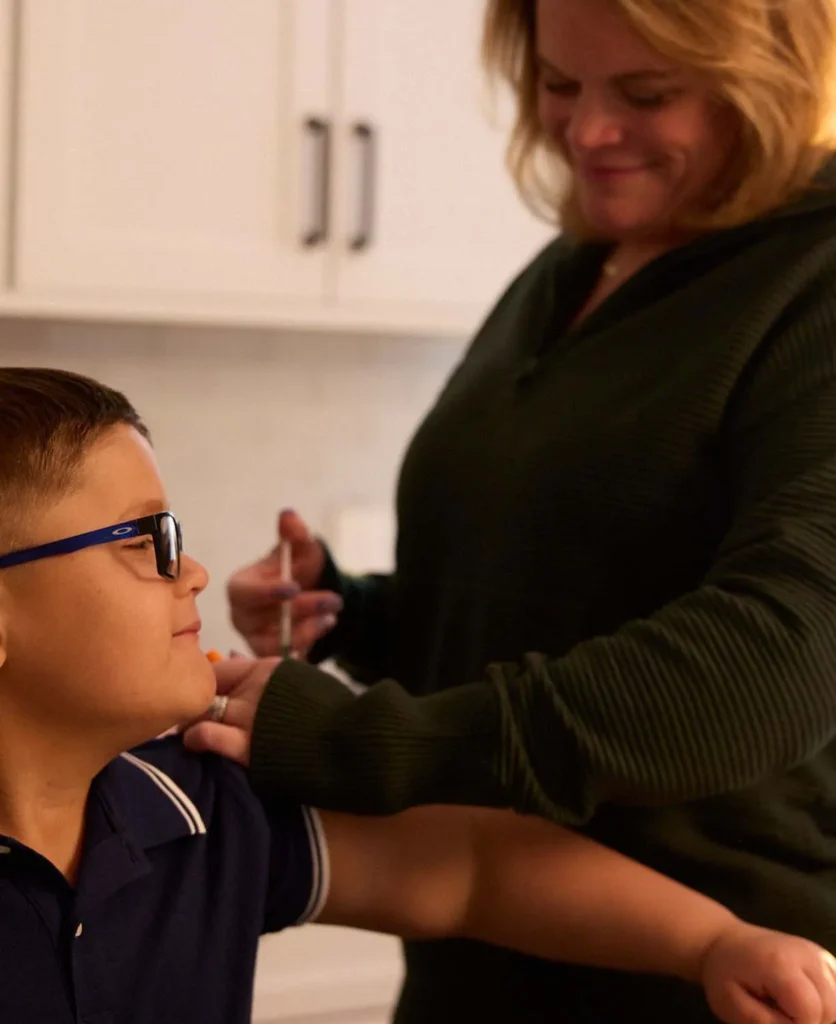
For the first time, Ben could play, focus, and simply be a kid.
Today, Ben is an active 7-year-old who practices karate and plays basketball. With the help of a once-daily medicine, he is able to participate in everyday childhood experiences – from sports to summer camp – that once seemed unthinkable.
“When I grow up, I want to be a carpenter,” Ben says.
While Ben’s journey is ongoing, his transformation reflects the power of science to unlock root causes and deliver life-changing targeted treatments – underscoring the promise of biotechnology and the determination of patients, families, and researchers who continue pushing forward until that promise becomes a life-changing reality.